
Avoiding hidden fees on a car rental is not about hunting for concealed clauses: in almost every case, the charges that inflate a bill are written plainly in the contract. They surprise people because they are not part of the headline daily rate.
Here are the items that open the gap between the advertised price and the price paid, and how to check them before you book.
Included mileage
This is the first item, and the most underestimated.
Many offers include a number of kilometres per day. Beyond that, each kilometre is billed. On a city stay you will never reach the limit. On a trip linking several regions, you can pass it on day two.
The calculation to run before booking: estimate your total route, divide by the number of days, compare with the included mileage. If you are over, you have two options — find an offer with a larger allowance, or fold the cost of the extra kilometres into your comparison. An offer that is cheaper per day but capped can cost more in total than a more generous one.
The fuel policy
Three formulas coexist, and their real cost is not the same.
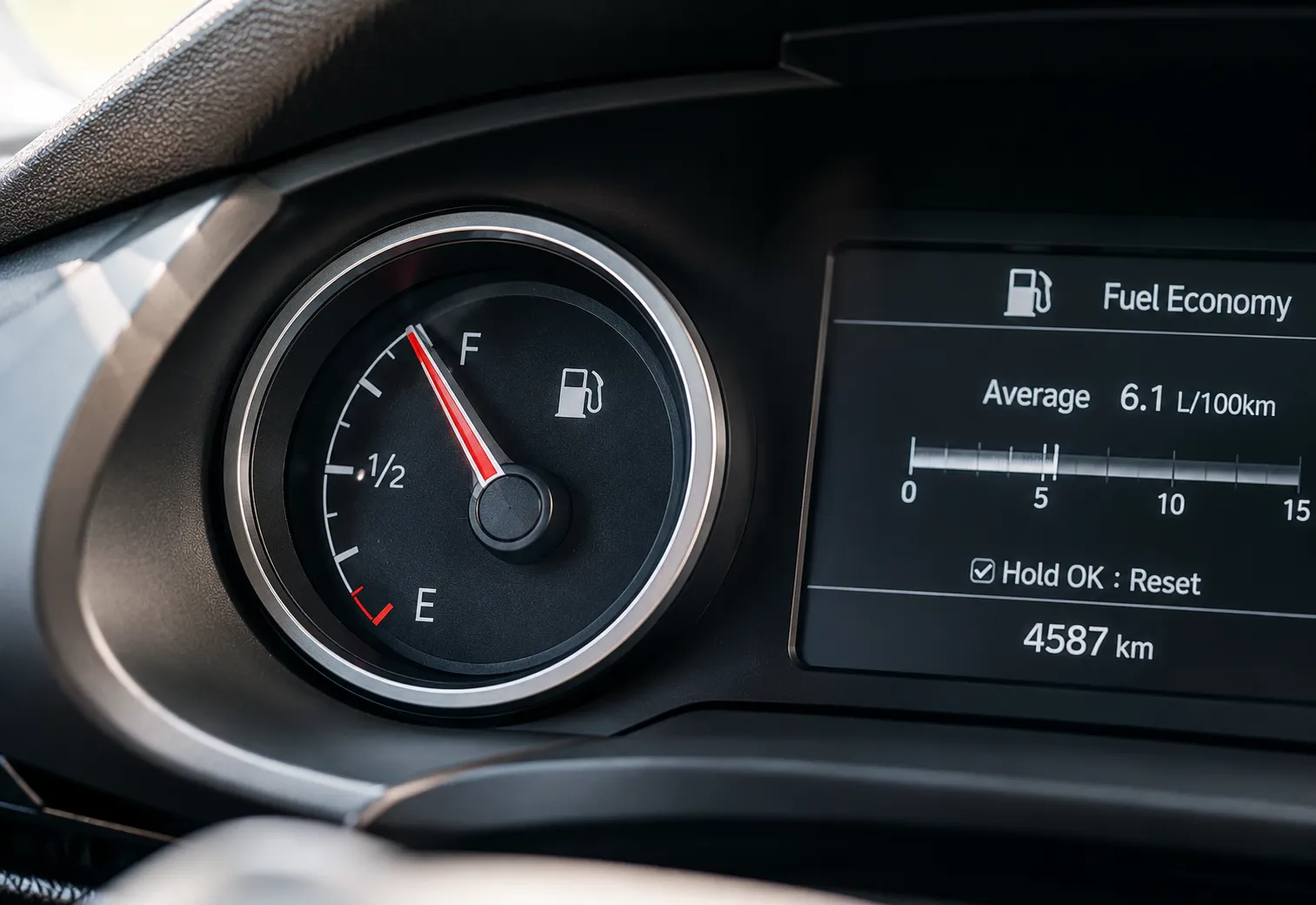
Full to full. You receive the car full and return it full. This is the clearest and generally the cheapest: you pay only for what you use, at pump prices.
Full to empty (prepaid). You pay for a full tank at the start and return the car empty. Fuel is then billed at the agency's rate, often above the pump price, and unused fuel is generally not refunded. Returning a car a quarter full means giving that quarter away.
Same level. A variant of full-to-full at an intermediate level, harder to return accurately.
In every case: fill up just before returning the car and keep the receipt. Missing fuel rebilled by an agency generally carries a service charge on top of the price per litre.
The deposit and the excess
The deposit is the amount left with the agency at pick-up and returned at the end. The excess is what you remain liable for if there is damage, taken from the deposit.
They are not fees as such, but they have a real impact:
- On your cash flow. The money you hand over is no longer available for the rest of the trip.
- On the refund. What can be kept depends on the condition of the car and the fuel level at return.
Check the amount on the listing before booking, and have it ready at pick-up. What can be kept, and how to avoid it, is covered in the car rental deposit in Tunisia. The related insurance mechanics are covered in which insurance to choose for a car rental in Tunisia.
Driver-related supplements
One item comes up regularly.
The additional driver. Everyone who will drive must be declared, which generally means a daily supplement. Not declaring them is not a saving: an undeclared driver falls outside the insurance, and an incident in that situation can land entirely on you.
Delivery, return and one-way
Three situations most agencies bill separately:
- Pick-up away from the agency (hotel, home, a given address);
- Returning in a different city from the pick-up point, known as one-way;
- Times outside opening hours, in particular very early morning or late evening.
These services are legitimate and often convenient. They simply need to be part of the comparison rather than a discovery on the invoice.
Late returns
Billing is by the day. A long enough delay can trigger a full extra day rather than an hourly pro rata.
Leave yourself room on the return trip, including the fuel stop and the condition check. If something goes wrong, tell the agency: a delay announced is usually handled better than a delay discovered.
Damage disputed on return
This is the most avoidable item of all, and removing it costs nothing.
At pick-up, have every pre-existing bit of damage noted on the contract — scratches, wheels, windscreen chips, dents — then photograph the car from every angle, interior included, with the odometer and the fuel level. Do it again on return.
Five minutes at the start and two at the end eliminate almost every dispute. Without those photos, a disagreement comes down to your word against a written report.
The simple rule
Before confirming a booking, check four numbers:
- included mileage per day, and the rate beyond it;
- the fuel policy;
- the deposit and excess amounts;
- the supplements that apply to your situation — additional driver, age, pick-up place and time.
An offer is compared on those four lines, not on the daily rate alone. On Rencaro they appear on every listing before booking, and the full applicable terms are on the rental conditions page.
In short
Hidden fees are rarely hidden: they are simply somewhere other than the advertised price. Mileage, fuel, deposit, driver supplements — four checks before booking, and the price quoted becomes the price paid.
To go further, see how to choose the right rental car in Tunisia and what documents you need to rent a car.